The Europa League, commonly known among Vietnamese fans as Cúp C2, has long been one of the most exciting competitions in European football. Although it does not feature all the major powerhouses found in the Champions League, the tournament has its own distinctive appeal, bringing together clubs with rich histories and emerging teams looking to establish their status.
So, how many teams are in the Europa League? How does the current format differ from the previous one? Which teams have a chance of progressing deep into the competition? Let’s explore all the key information about the Europa League in the article below.
How many teams compete in the main phase of the Europa League?
Looking specifically at the league phase, the Europa League currently features 36 teams. UEFA introduced this format in the 2024/25 season, replacing the traditional group stage. The 2026/27 season continues to use this 36-team format.
All 36 teams compete in a single league table, playing eight matches—four at home and four away—against eight different opponents.
As a result, the competition becomes highly unpredictable. Fans can follow each round through Link Xoilac and keep up with KQ Bóng Đá to stay informed about the latest changes in the standings.
How are the 36 teams allocated?
The answer to the question how many teams are in the Europa League becomes more interesting when we look at how clubs qualify for the competition.
Under the 2026/27 structure, the 36 league-phase places come from several different routes. Some teams qualify directly through their domestic league performances, while others must progress through the qualifying rounds. In addition, teams eliminated from certain stages of the Champions League may also move into the Europa League.
This allocation system creates a distinctive mix of familiar representatives from major footballing nations and clubs from countries with lower UEFA rankings.
As a result, every Europa League season features some unexpected matchups. Fans can visit XoilacTV to watch matches live and then check KQ Bóng Đá to assess each team’s form.
How has the Europa League format changed?
The biggest difference is that the Europa League no longer uses the traditional group-stage format.
All 36 teams are divided into four seeding pots, each containing nine clubs, for the draw. Each club then faces eight opponents, with two opponents drawn from each seeding pot. The fixtures are split evenly between home and away matches.
This means every match matters for the overall standings. A victory not only helps a team accumulate points but can also improve its position, providing a significant advantage when the knockout stage begins.
This is also why Europa League matches are attracting increasing attention among fans watching on Xoilac Live.

What positions are the 36 teams competing for?
After eight matchdays, all 36 teams are ranked together in a single league table.
- Positions 1–8: qualify directly for the round of 16.
- Positions 9–24: enter the knockout play-offs to compete for a place in the round of 16.
- Positions 25–36: are eliminated from the competition.
This system means the battle is not limited to the teams at the top. Even finishing 20th or 22nd can be crucial, as a difference of just a few points may determine whether a club continues its European campaign or exits the tournament.
For fans, following KQ Bóng Đá after each round has also become more important for understanding the Europa League standings accurately.
Why does the new format make the Europa League more exciting?
Under the old system, the group stage made the tournament structure relatively easy to understand. However, the league-phase model creates a sense of continuous competition.
Each team plays only eight matches, but its opponents come from different seeding pots. A club might face a historically successful side before taking on an emerging team from a less prominent footballing nation.
This makes the Europa League a stage where clubs outside the Champions League’s leading contenders can demonstrate their quality. A victory over a strong opponent can completely change a club’s standing.
That is why Xôi Lạc Link is not just a place where fans look for exciting matches but also a convenient way to follow teams throughout each round of the competition.
Which teams are worth watching in the Europa League?
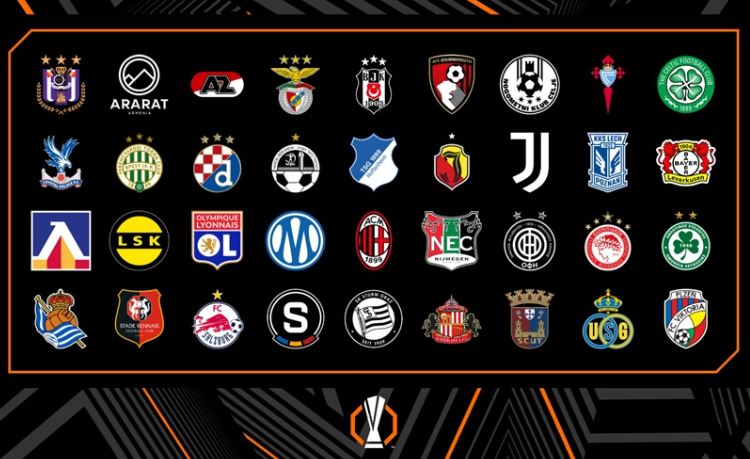
The 2026/27 Europa League season features several notable teams, including Milan, Juventus, Leverkusen, Lyon, Marseille, Real Sociedad, Benfica, and Crystal Palace. UEFA’s official list confirms that the 36 clubs in the league phase come from a wide range of footballing nations.
The presence of clubs with impressive records gives the tournament considerable appeal. Meanwhile, lesser-known teams add an element of unpredictability, especially when they manage to defeat opponents considered stronger on paper.
This is also why football fans frequently visit Xoilac to avoid missing the matchups everyone is looking forward to.
Where can you watch the Europa League and check the results?
With a packed fixture schedule, fans need a convenient way to follow the competition. Link Xoilac is a commonly searched term among viewers looking to watch football matches online.
Alongside watching matches, fans can also check KQ Bóng Đá to keep track of results, standings, and each team’s form after every round.
More importantly, following the competition regularly helps viewers avoid missing unexpected changes in the race for knockout-stage qualification.
Conclusion
So, how many teams are in the Europa League? The current answer is 36 teams in the league phase. All clubs compete in a single league table, playing eight matches before being divided into teams that qualify directly for the round of 16, those entering the play-offs, and those eliminated.
With its new format, the Europa League has become increasingly unpredictable and competitive. Just a few matches can significantly change the standings. Therefore, alongside following Xoilac 365, fans should regularly check the results to understand how the competition develops from round to round.